Fact Checked by


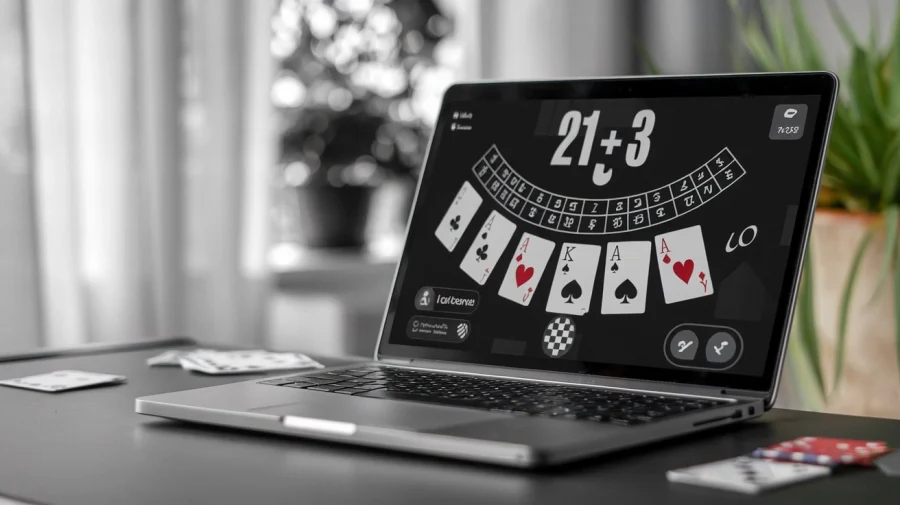
Out of all variations, many view 21+3 blackjack as the best version of this iconic table game. That’s because it doesn’t take anything away from traditional blackjack; it simply adds a few more side bets.
If you want to learn how this side bet works, check out the guide below. We’ll explain the rules, payout structure, and give some tips on how to benefit from the game.
What Is 21+3 in Blackjack?
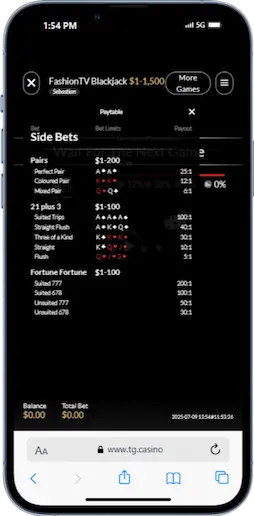
Blackjack 21+3 is a unique spin on a traditional game that adds up to 2 side bets. You need to place these side wagers before the cards are dealt. To do so you need to put chips in one or both designated areas (circles) that are adjacent to your main area for regular bets.
The 21+3 blackjack side bet is about getting a 3-card combo, using two face-up cards dealt to you and one dealer’s face-up card. The card combinations you are aiming for are imported directly from Poker, so we have:
- Flush
- Straight
- Three of a kind
- Suited three-of-a-kind
- Straight flush
The player needs to place this blackjack side bet 21+3 at the same time as he is placing the main wager for that hand. Also, this side bet is resolved immediately after the cards are dealt. If you get one of the possible 3-card combinations, you get paid based on a payout table. Once the side bet is settled, the game will continue regularly.
How Does 21+3 Blackjack Side Bet Work?
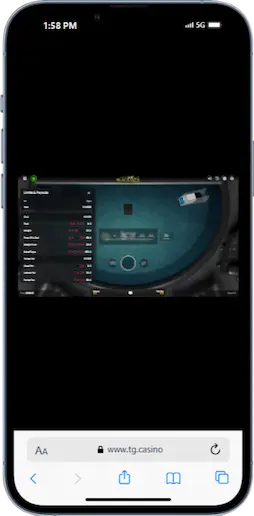
Now that you know what does 21+3 mean in blackjack, let’s talk about the side bet itself and show you how it works. First off, you need to make sure that you are playing this version of blackjack, as it’s not possible to place these wagers in the majority of blackjack jack games. So, find an online casino or the best blackjack app, as they are likely to have blackjack 21 + 3.
The rules might vary depending on the casino, but in 21 3 blackjack, you should have one extra circle or betting area, with the number 3 inside, that you use for this special wager. According to 21+3 blackjack rules, you can only make a side bet once you’ve staked chips for a regular bet.
Put your chips in a small circle with the number 3, and the wager will be active when the round starts. Two face-up cards are dealt to you, and one face-up card goes to the dealer. Now, if those 3 cards on the table form one of the following combinations, you immediately win that side bet and get paid.
- Flush (Payout 5:1) – 3 face-up cards have the same suit (8 of hearts, 2 of hearts, 10 of hearts).
- Straight (Payout 10:1) – 3 cards have consecutive value (7 of spades, 8 of clubs, 9 of hearts). Picture cards are not counted as 10 for the purpose of the side bet calculation.
- Three of a kind (Payout 25:1) – 3 cards have the same rank (Jack of spades, Jack of clubs, Jack of diamonds).
- Straight flush (Payout 30:1) – 3 cards have consecutive values and have the same suit (7 of diamonds, 8 of diamonds, 9 of diamonds).
- Suited three-of-a-kind (Payout 100:1) – 3 cards of the same rank and same suit (2 of hearts, 2 of hearts, 2 of hearts).
Now, the above-listed 21+3 blackjack payouts are not universal. They will vary depending on the casino and the game version. After all, the number of decks in the shoe will affect 21+3 blackjack odds for these side wagers, and the payout structure needs to reflect that.
The Top 3 Side Bet
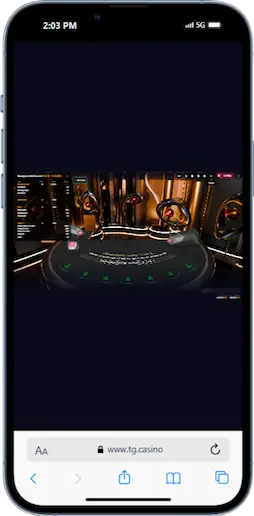
In some variations of blackjack 21 3 there is another side bet called top 3. In this instance, you place an additional wager, but to win it, the hand combination needs to be – a three-of-a-kind, a straight flush, or a suited three-of-a-kind.
When this optional wager is available, you will see that there is another designated area for placing chips, and it will say “Top 3” on that circle. In order to make a top 3 side bet you need to place a regular side wager of 21+3 in blackjack, and then put some additional chips on the circle that says top 3.
If you place both of these bets, the round can start, and you will once again check to see if the two cards dealt to you and the dealer’s hole card create a winning combination. If that winning combo is three-of-a-kind, straight flush, or suited three-of-a-kind, the payouts will be significantly increased.
- 90:1 for three-of-a-kind
- 180:1 for the straight flush
- 270:1 for suited three-of-a-kind
However, if some of these combinations come up, and you haven’t placed the top 3 side bet, then you only get paid for trips, straight or flush.
In essence, this is what’s 21+3 in blackjack with a “top 3” side wager, and how it affects the winning payouts. That said, each game designer or casino will handle the rules and payouts for this option differently.
Blackjack 21+3 Side Bet Variations
There aren’t any side bet variations that weren’t covered in the 21+3 blackjack examples above. The only exception would be if you play a 2 deck version, where suited three-of-a-kind isn’t even possible. But this version might have “Pairs” as a potential winning combo, and it will likely pay 2.5 to 1. It should be mentioned that there are other pairs-related side bets, so it’s not exactly accurate to lump them together with 21+3.
Also, the payout table will differ based on the version you play and how many decks are used in that version. 21 3 blackjack odds are affected by these factors, and you obviously can’t even achieve some of these combinations with a single deck of cards.
If you are paying a top 3 variant of 21 plus 3 blackjack, then payouts on three-of-a-kind, straight flush, and three-of-a-kind suited outcomes will be significantly higher. But you’ll need to spend more chips to participate or “unlock” this as a separate outcome for the resolution.
How to Place the Blackjack Side Bet 21+3
First, you need to have an account on an online casino with regular or live dealer blackjack. It would be ideal to read the reviews and confirm that they have this version of the game before you make an account. The same goes for land-based casinos, make sure to check if they have 21 + 3 blackjack.
Step 1: Buy chips, take a seat at the blackjack table, and place the regular bet first.
Step 2: Then put a chip on a circle next to the area for regular bets. The circle should have the number 3 inside of it.
In a version with the top 3 bet, there will be another separate circle next to a designated area for main bets. You will have to place a regular bet, then an optional side bet, and then you can put chips on the top 3 side wager.
Step 3:Wait for the cards to be dealt.
Step 4:Check if you got a winning combo, and if you do, collect the winning chips.
Step 5:Proceed with the regular game of blackjack.
21+3 Blackjack Payouts: What You Can Win
As stated, payouts vary for each version, but in a typical 8-deck variation, the payouts look something like this:
- Flush – 5:1
- Straight – 10:1
- Three of a kind – 25:1
- Straight flush – 40:1
- Suited three-of-a-kind – 100:1
In the 6-deck variation, the following payout structure will likely be in place:
- Flush – 5:1
- Straight – 10:1
- Three of a kind – 20:1
- Straight flush – 30:1
But if you play some top 3 versions, then payouts on all outcomes might be 9:1, and if you make an additional side bet for the top 3, the payouts on those combinations will look like this:
- Three of a kind – 90:1
- Straight flush – 180:1
- Suited three-of-a-kind – 270:1
Understanding the House Edge on the 21+3 Blackjack Bet

The house edge on these side bets does give casinos more advantage. For a 6-deck version, the house edge is around 4.14% and for an 8-deck it’s 3.18%. It can also, get higher depending on the payout structure and the number of decks used.
It’s always better to play on sites that try to keep the house edge to a minimum. So, go over the reviews of the best blackjack casinos and check if you can get a promo or cashback perk to even out some of your disadvantages.
21+3 Blackjack Odds and Payout Chances
Well, we’ve covered in detail what is 21 + 3 in blackjack, but we haven’t discussed if this optional wager is worth it. Here are the odds of hitting these winning combos in versions that use 6 decks and 8 decks.
| Combination | 6-deck | 8-deck |
|---|---|---|
| Straight | 0.031021 | 0.030947 |
| Flush | 0.058424 | 0.058841 |
| Straight flush | 0.002068 | 0.002063 |
| Three of a kind | 0.005041 | 0.005169 |
| Three-of-a-kind suited | 0.000207 | 0.000244 |
21+3 Blackjack Strategy Tips to Improve Your Side Bet Odds
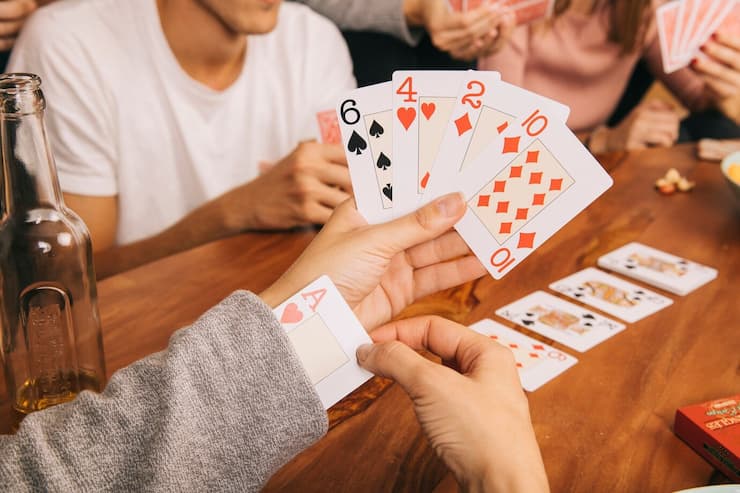
Assuming you already know the basics of how to play blackjack, there are a few ways to improve your odds and use the optional wager to your benefit.
- Divide your budget to play as many hands as possible: First off, stick to effective bankroll management as your primary 21+3 blackjack strategy. This keeps your losses to a minimum and gives you a decent recovery.
- Play perfect blackjack with the help of strategy charts: Take advantage of the blackjack chart that tells you the best course of action in any given situation. It keeps the house edge to a minimum and helps you thin out the deck which is needed for later stages of this strategy.
- Practice card counting in free-to-play mode: You need to learn how to count cards and when to bet more aggressively to take advantage of your increased odds. The idea is that if the majority of the cards left in the shoe are high-value cards, the probability of hitting blackjack increases. This takes time to master, so play in demo mode.
- Get a helping hand from a friend or use free software: If you are playing on live dealer sites, you can have a friend help you track the remaining cards in the shoe. This should give you a chance to estimate the likelihood of 21+3 side bets popping up.
- Don’t bet big on the 21+3 side wager: When going through with the optional bet, only use small bet amounts, and only place them if your odds of getting them have increased.
- Find the game version with the most favorable odds: Opt for those game versions that have the best payout for this side bet.
How Card Counting Works for 21+3 in Blackjack
Card counting can be a valid 21+3 blackjack strategy, but you’d really have to use some sort of software to execute it properly. Regular card counting strategy doesn’t rely on memorizing exactly which cards remain in the shoe. It simply helps you tell whether the majority of the cards remaining are high-value (10, J, Q, K, A) or low-value (2, 3, 4, 5, 6) cards.
There is free card counting software available online, but using it is against casino rules. Therefore, if you are caught, casinos have the right to deny you payouts. Card counting without the use of software is perfectly legal, and it’s how professional gamblers make their money.
You would also have to calibrate the app or software to measure the odds of winning on these side bets based on the cards that remain in the shoe. In other words, you would have to start with the fresh shoe and then enter the cards that were dealt each round.
Shuffle Tracking in Blackjack
Instead of tracking individual cards, you can keep an eye on card groups during the shuffling process. You’ll observe the high and the low value card clusters and their placement in the deck, and estimate their position once the deck is cut.. Once you reach the clusters of high-value cards you can bet more aggressively or even put money on the side bet.
You should also learn different shuffle methods and recognize them accordingly to know where the cards are placed. Unlike card counting, this method is only used at the beginning of the game, and you’ll track a group of cards instead of the running total. This skill requires your undivided attention and focus, meaning it may take you some time to master this art.
One of the disadvantages of this strategy is that it’s usually not available for live dealer game solutions. In most cases, the shuffling is done off-camera using software solutions, so you won’t be able to keep an eye on card placement online. The shuffle process may be irregular or mixed, making it difficult to track groups during your live dealer gameplay.
Pros and Cons of the 21+3 Side Bet
There is a lot to like about this version of blackjack, and as with any other game, there are some aspects you might find bothersome. The pros and cons list below sums up our thoughts on this subject.
Pros:
- It’s a more entertaining version of the game
- Perfect for high rollers who love bets with big multipliers
- It caters to fans of video poker and fans of blackjack at the same time
- Using the right strategy, players can improve their odds
- Possible high returns on small bets
Cons:
- The house edge on the optional wagers is bigger
- Not all operators host this version of the game
Best Tips for Winning with the 21+3 Side Bet in Blackjack
If you wish to win on these side bets, be prepared for a lengthy game. Here’s a short list to keep in mind if you want to boost your odds of winning.
- You should choose an 8-deck version and start with the fresh shoe.
- Avoid placing bets until the shoe reaches its mid-point.
- Keep track of the cards and symbols that remain in the shoe.
- Start placing the bet if you feel the remaining cards have a disproportionate number of cards with the same suit. This is when your odds of hitting a flush bet are better.
Comparison with Other Blackjack Side Bets
Both land-based and live dealer online casinos host multiple variations of blackjack. What makes each version unique are the side bets they have available. For those of you unfamiliar, here are some other optional wagers.
What is the Best Place to Play Blackjack 21+3?
In theory, any online casino that hosts live dealer games from Evolution should have this version of blackjack. That said, you shouldn’t just pick a brand based on the games they host. It’s crucial to choose an operator that guarantees user safety and that gives neat player benefits. Here’s a list of things to check:
- See if the brand has a valid license and if it’s certified to host provably fair games.
- Read the terms and conditions in detail and pay attention to payment information. Withdrawal limits and processing time can often be dealbreakers for players.
- Go through the promotions page and read the bonus terms to see if claiming the promos is worth it.
- Go through their lobby and see what other games they host; after all, you’ll likely get bored at some point and want to try something else.
If you wish to give 21+3 blackjack a go, then signing up with TG.Casino would be a good place to start. The brand meets all of the above-mentioned standards and you can play on your phone through the Telegram app.
FAQs
Is the 21+3 side bet included in standard blackjack rules?
How do you know if a blackjack table offers the 21+3 blackjack bet?
What card combinations win the 21+3 blackjack side bet?
What are the payouts for a winning 21+3 blackjack bet?
Can you actually win money on 21+3 blackjack side bets?
Does placing the side bet affect how the cards are dealt?
Can you use card counting to gain an edge in 21+3 blackjack?
Is the 21+3 side bet worth it in blackjack?
Playing Responsibly
The best strategy for having fun while gambling is to manage your bankroll carefully and to gamble responsibly. Don’t shy away from using the tools and resources available on the gambling sites. You can also apply for self-exclusion if you have a hard time controlling this habit. For more insightful advice on problem gambling, consult the links below:
Call 1-800-GAMBLER if you need to talk to a trained counselor who can help with gambling addiction.